Correlation of serum iron and chronic kidney diseasestages: A cross-sectional study
DOI:
https://doi.org/10.17532/jhsci.2026.2970Keywords:
Chronic kidney disease, serum iron, ferritin, estimated glomerular filtration rate, anemiaAbstract
Introduction: Chronic kidney disease (CKD) is a progressive disorder characterized by a gradual loss of renal function and frequent disturbances in iron metabolism. These disturbances often lead to iron deficiency and anemia. Serum iron and ferritin are fundamental biomarkers for evaluating iron status and can provide valuable insights into disease severity and progression. The aim of this study was to determine if there is an association between CKD stage and serum iron concentration, focusing on the dynamics of iron homeostasis and CKD progression.
Methods: At the Clinical Center of the University of Sarajevo, a cross-sectional study was conducted, including 115 participants diagnosed with CKD in moderate to advanced stages (3-5). Patients with acute infections, other causes of anemia, or acute kidney injury were excluded to avoid factors that could confound iron metabolism. Laboratory analyses included measurements of serum iron, ferritin, urea, and creatinine. Estimated glomerular filtration rate (eGFR) was calculated using the modification of diet in renal disease equation to determine disease stage. Descriptive statistics and correlation analyses were used to examine associations between serum iron, ferritin, and CKD stage, with statistical significance set at p < 0.05.
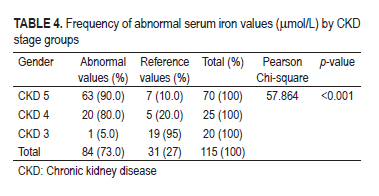
Results: The study included 64% male and 36% female participants, with 17% in stage 3, 22% in stage 4, and 61% in stage 5 of the disease. As CKD progressed, serum ferritin levels increased, while serum iron levels gradually declined. Correlation analysis revealed a significant positive association between eGFR and serum iron (p < 0.01). The results also indicated that abnormal iron values were more frequent in males than in females, which is consistent with previous reports.
Conclusion: The severity of CKD is associated with disturbances in iron metabolism, pointing to the importance of monitoring
serum iron and ferritin. These findings support early detection, individualized patient management, and timely interventions to prevent iron deficiency and anemia in patients with CKD.
Downloads
Downloads
Published
License
Copyright (c) 2026 Mervana Marić, Dalila Smajlović, Emina Hodžić, Arzija Pašalić, Samra Hadžiahmić Limo, Lejla Čano Dedić

This work is licensed under a Creative Commons Attribution 4.0 International License.