Tissue-equivalent materials in three-dimensional-printed anthropomorphic breast phantoms for mammography
DOI:
https://doi.org/10.17532/jhsci.2026.2916Keywords:
Breast phantom, mammography, three-dimensional printing, materialsAbstract
Introduction: Anthropomorphic breast phantoms are essential tools in mammographic imaging, allowing repeated and safe evaluation for training, quality assurance, and protocol optimization without patient radiation exposure. With the increasing use of three-dimensional (3D) printing, these phantoms can be tailored to replicate complex breast anatomy, but their effectiveness is largely determined by the selection of appropriate tissue-mimicking materials. This study reviews the literature on materials used in the fabrication of 3D-printed breast phantoms, focusing on their physical and radiological properties and their ability to simulate relevant mammographic structures.
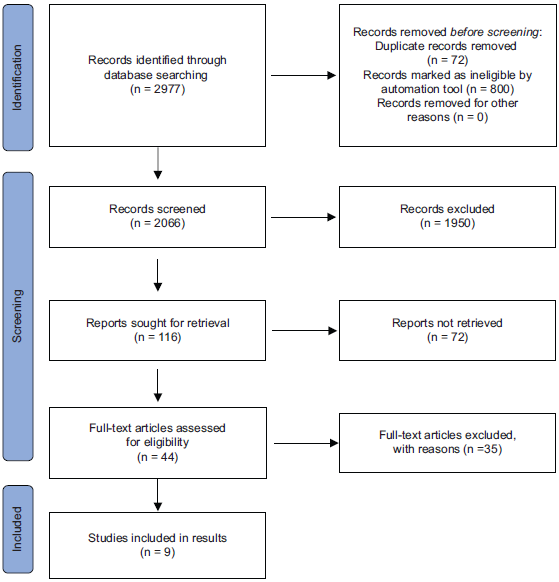
Methods: A literature search was performed in PubMed and Scopus databases during the summer of 2025. Studies published in English between 2015 and June 2025 were included. The review focused on research involving 3D-printed breast phantoms for mammography that utilized tissue-equivalent materials, following predefined inclusion and exclusion criteria.
Results: Nine studies met the inclusion criteria and were grouped according to the main material categories used in phantom fabrication: thermoplastic polymers, photopolymer resins, and composite materials. Thermoplastics were frequently selected because of their accessibility and reasonable radiological similarity to adipose and glandular tissues. Photopolymer resins provided high spatial resolution and improved anatomical detail. Composite materials, including radiopaque fillers and contrast agents, were used to reproduce pathological features, such as lesions and microcalcifications.
Conclusion: Material selection plays a key role in the development of realistic 3D-printed anthropomorphic breast phantoms for mammography. Future research should focus on standardizing material selection and phantom design to better align with diagnostic requirements and improve their value in clinical training, quality control, and imaging research.
Downloads
Downloads
Published
License
Copyright (c) 2026 Amna Pezo, Fuad Julardžija, Adnan Beganović, Arzija Pašalić, Merim Jusufbegović, Enes Kurta, Adnan Šehić

This work is licensed under a Creative Commons Attribution 4.0 International License.