The quality of pregnant women’s nutrition throughout the pregnancy trimesters
DOI:
https://doi.org/10.17532/jhsci.2026.3153Keywords:
Prime diet quality score, pregnancy, pregnancy trimester, quality of nutritionAbstract
Introduction: Fertility, conception, and pregnancy are sensitive to nutritional deficiencies. Maternal nutritional status before pregnancy and weight gained during pregnancy are key factors influencing pregnancy outcomes and infant health. Balanced nutrition during pregnancy is of crucial importance for supporting optimal fetal growth and development and the physiological changes in the mother. The aim of this study is to assess changes in the dietary habits of pregnant women throughout the three trimesters of pregnancy.
Methods: The study conducted is a prospective, longitudinal, cohort, and comparative study. The study included 109 participants aged 18-40 years with permanent residence in the Sarajevo Canton area who attended prenatal check-ups at the Institute for Women’s and Maternal Health Care from December 2024 to August 2025. The research instrument used was a modified, standardized survey questionnaire, the Prime Diet Quality Score (PDQS).
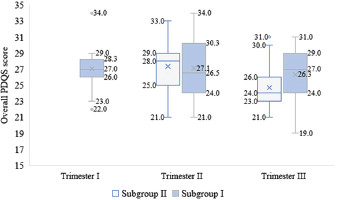
Results: The overall weighted PDQS-24 HR score was 26.5 ± 3.0. Significant trimester-related changes were observed in several food groups, including green leafy vegetables, citrus fruits, processed meat products, low-fat and full-fat dairy products, whole grains, sugar-sweetened beverages, fried foods consumed outside the home, and vegetable oils. The healthy-food component declined across pregnancy, while changes in the unhealthy-food component were less consistent. The internal consistency of the adapted instrument was acceptable (Cronbach’s α = 0.678), and Bartlett’s test of sphericity was significant (χ2 = 1229.204, df = 253, p < 0.001).
Conclusion: Dietary quality changed significantly across pregnancy, particularly in the later trimesters, with reduced consumption of several favorable food groups, including green leafy vegetables, citrus fruits, dairy products, and whole grains. Repeated nutritional assessment during antenatal care may help identify unfavorable dietary changes as pregnancy progresses.
Downloads
Downloads
Published
License
Copyright (c) 2026 Minela Velagić, Amra Mačak Hadžiomerović, Bakir Katana, Arzija Pašalić

This work is licensed under a Creative Commons Attribution 4.0 International License.