The relationship between perceived social support and positive mental health among students at the University of Sarajevo - Faculty of Health Studies – A cross-sectional study
DOI:
https://doi.org/10.17532/jhsci.2025.2864Keywords:
Mental health, perceived social support, positive mental health, studentsAbstract
Introduction: Social support is very important in the educational transition for the promotion of well-being and transition among students of all ages, cultural identities, and educational levels. Support from parents, friends, teachers, and other relevant persons contribute to the academic, social, and emotional development of 1st-year undergraduate students.
Methods: A cross-sectional study was conducted. The convenience sampling method was used to determine the sample. The research included 148 students of the 1st year of the first cycle of studies at the Faculty of Health Studies. The instruments used in the research are the Multidimensional Scale of Perceived Social Support Questionnaire and the Mental Health Questionnaire-Short Form.
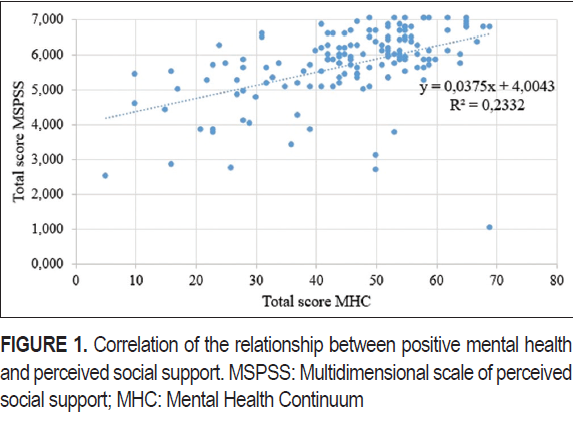
Results: Out of the total number of respondents, n = 126 (85.10%) perceived a high level, n = 17 (11.50%) a moderate level, while n = 5 (3.40%) a low level of social support. Out of the total number of 148 respondents, n = 70 (47.30%) belonged to the category of high positive mental health, n = 67 (45.30%) belonged to the category of moderate positive mental health, while n = 11 (7.40%) of the respondents characterized their mental health as low positive mental health. It was established that there is a medium-strong relation, with a positive sign, in correlation between positive mental health and perceived social support.
Conclusion: The research results indicate a direct connection between perceived social support and positive mental health in the 1st year of the first cycle of University of Sarajevo-Faculty of Health Studies students, which indicates the importance of providing social support as an important resource for preserving the mental health of students during their studies.
Downloads
Downloads
Published
License
Copyright (c) 2025 Amela Salihović, Arzija Pašalić, Suada Branković, Amer Ovčina, Ema Pindžo, Eldina Smječanin, Adela Erović-Vranešić, Nerma Bašić, Jasmina Mahmutović

This work is licensed under a Creative Commons Attribution 4.0 International License.